Gooseneck vs Bumper Pull: Which Trailer Do You Need?
The short answer
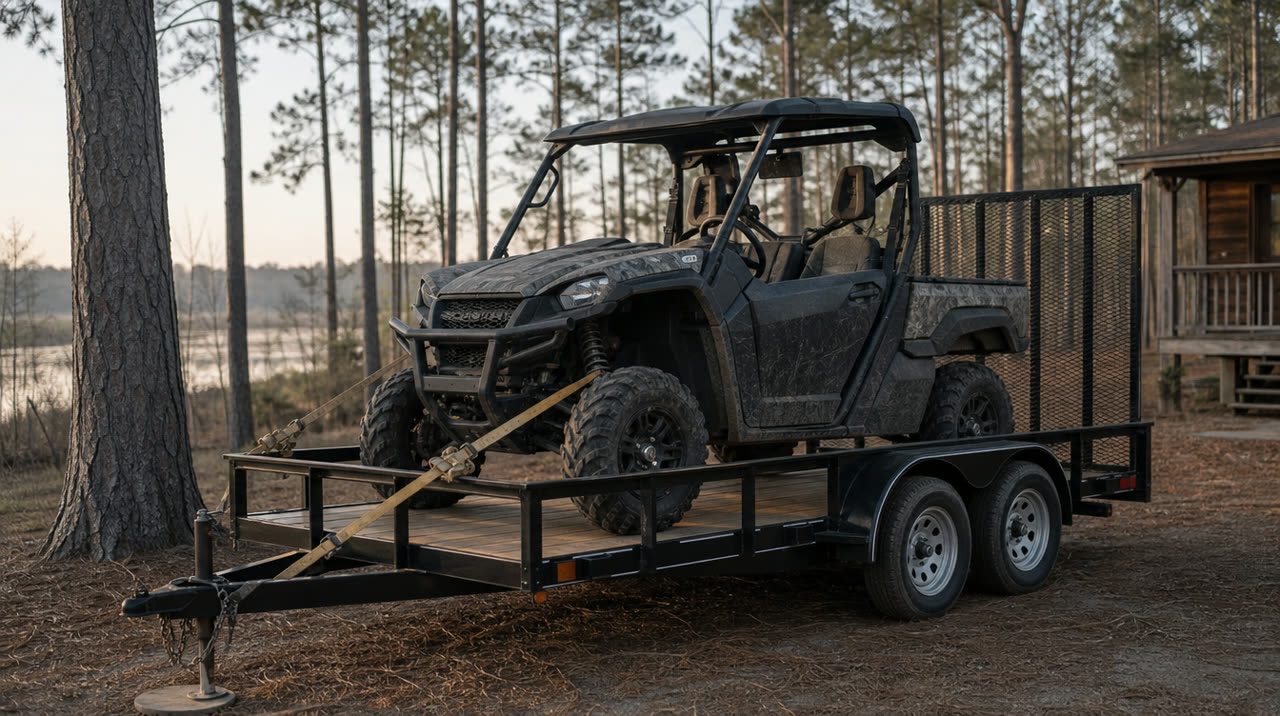
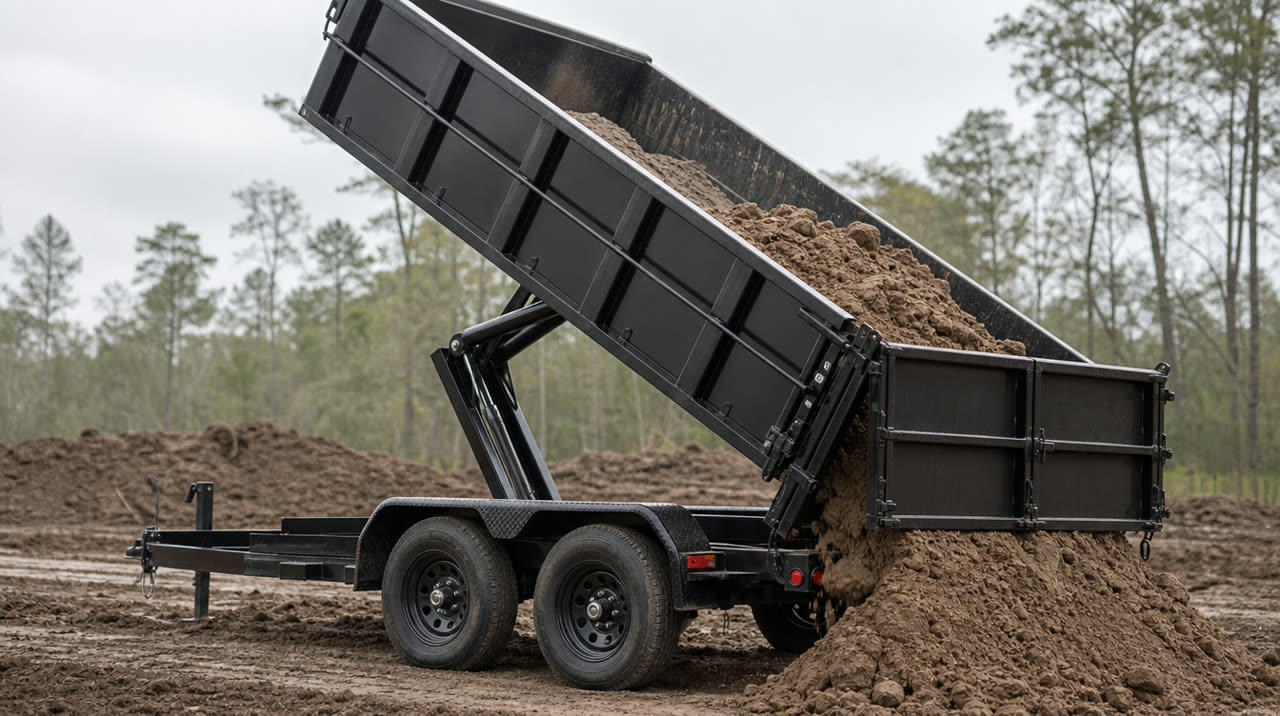
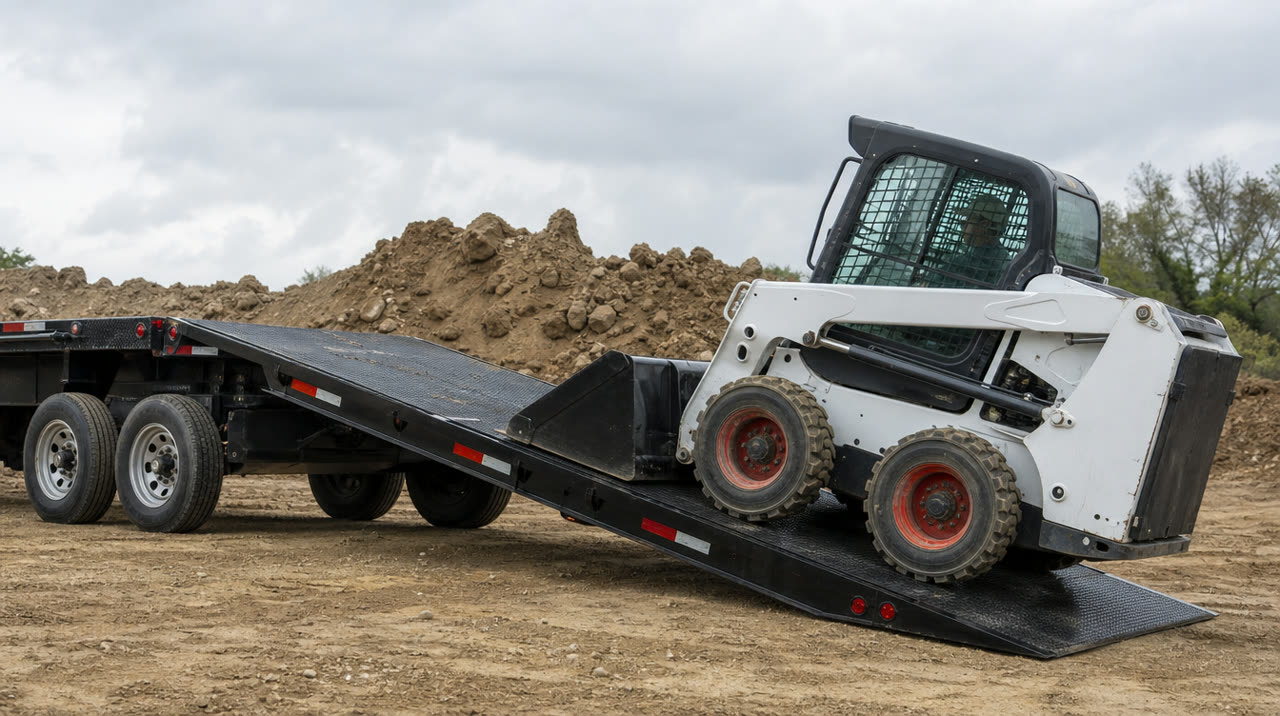
If the heaviest thing you haul weighs under 10,000 lb and rides behind a three-quarter-ton or one-ton pickup a few days a week, a 14K bumper-pull equipment trailer does the job and costs far less to get into. If you stack attachments on a skid steer, haul an excavator with a thumb and a bucket, or run hotshot freight out of the Port of Iberia or down to Fourchon, you have already outgrown a bumper pull and you need a gooseneck.
Here is the long version, with numbers.
What the two words mean
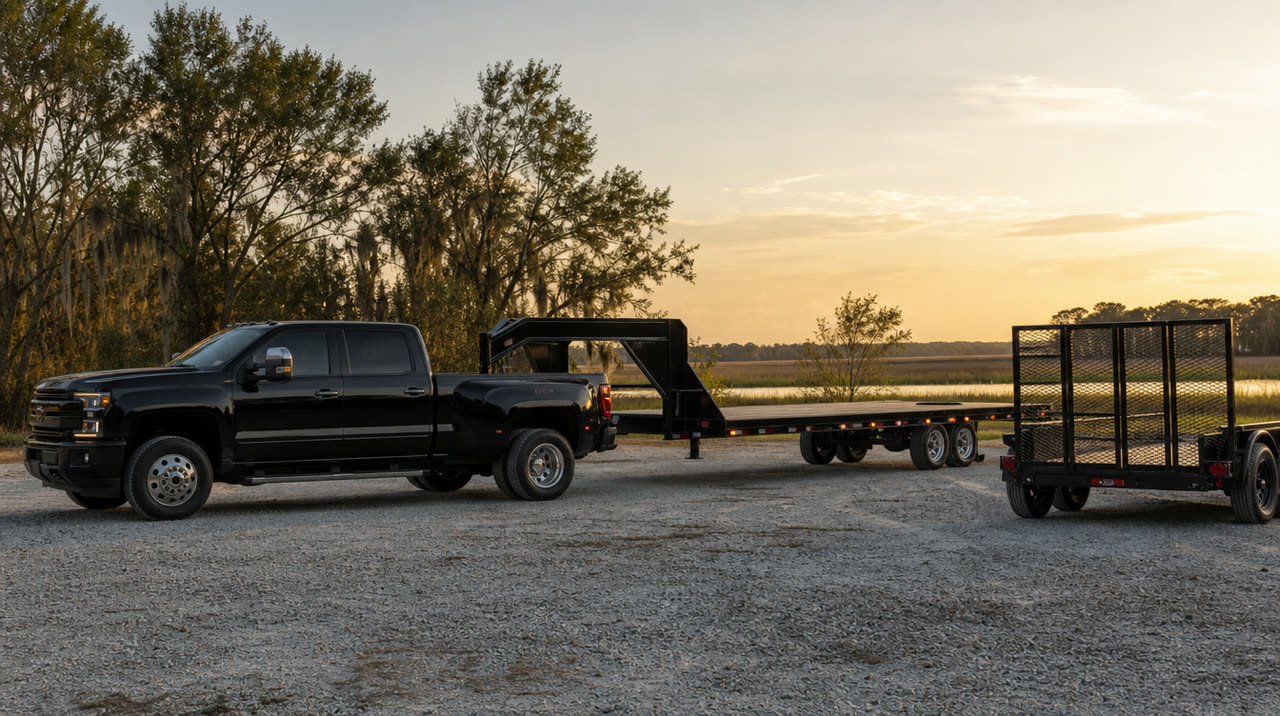
A bumper pull hitches to a ball in a receiver behind the truck's rear bumper. Its tongue weight pushes down behind the rear axle, which is why a heavy bumper pull can lift the front of the truck and wander in a crosswind.
A gooseneck hitches to a ball mounted in the truck bed, directly over the rear axle. The neck rises over the tailgate and the weight sits on the frame where the truck is built to carry it. Every other difference, payload, stability, turning and cost, comes from that one.
The two trailers we will compare are both on our September Load Trail truckload:
- Load Trail CH8322: 83 inches by 22 feet, 14,000 lb GVWR on two 7,000 lb Dexter axles with electric brakes on both, 6-inch channel frame, MAX Ramps dove, 2-5/16-inch adjustable coupler, 10K drop-leg jack. Two are coming.
- Load Trail GP0230: 102 inches by 30 feet, 24,000 lb GVWR on two 10,000 lb Dexter axles with duals, 5-foot self-clean dove with MAX Ramps, two 10K drop-leg jacks, full-width front toolbox between the risers. One is coming; the full build is on coming soon.
Payload decides most of it
GVWR is not what you can haul. Payload is GVWR minus the trailer's own weight, and a gooseneck's extra steel eats into its rating before you load anything.
| CH8322 14K bumper pull | GP0230 24K gooseneck | |
|---|---|---|
| GVWR | 14,000 lb | 24,000 lb |
| Empty weight | About 3,160 lb (dealer spec sheet, same build) | 7,630 lb for a 102x30 GP24 on Load Trail's spec table (5,480 lb at 20 ft, 9,860 lb at 40 ft); axle and option choices move it, so check the build sheet |
| Usable payload | About 10,840 lb | About 16,370 lb on Load Trail's 30 ft figure; check the build sheet |
| Deck | 83 in between the fenders, 22 ft | 102 in full width over the wheels, 30 ft |
| Deck height | 24 in (Load Trail CH14 spec) | 33.5 in (Load Trail GP spec) |
| Tires | 4, ST235/80R16 LRE | 8, ST235/80R16 LRE duals |
The 14K gives up almost nothing to its rating: 3,160 lb of trailer leaves close to 11,000 lb for a compact track loader, a 4-ton mini-excavator, a tractor with a cutter or a pickup from the auction in Carencro, one at a time. The gooseneck is not just 10,000 lb more rating; it is 19 inches more usable width, because the deck rides over the wheels with no fenders, and 8 more feet of length, so the machine and its attachments ride together.
Where the bumper pull runs out is not one big machine, it is one machine plus everything that goes with it. A 9,000 lb skid steer is fine. The same skid steer with a mulcher head, forks and a bucket chained behind it is over the line, and the scale on I-10 at the Texas line does not round down.
Stability: where the weight sits
Hitch shops use two rules of thumb: a bumper pull wants 10 to 15 percent of its total weight on the tongue, and a gooseneck wants about 20 percent on the pin. Against the ratings, that is 1,400 to 2,100 lb hanging behind the bumper on a loaded CH8322, and around 4,800 lb sitting over the rear axle on a loaded GP0230.
The bumper pull's number is smaller but it is in the worst place. Weight behind the axle levers the front end up, lightens the steering and gives a crosswind something to push on; anyone who has crossed the Atchafalaya Basin Bridge in a south wind knows the feeling. A loaded 14K trailer needs a good brake controller, the tongue weight set right and, past a certain point, a weight-distribution hitch.
The gooseneck's pin weight is more than twice as much, but it rides on the frame between the cab and the axle, so the trailer follows the truck instead of steering it. At 70 mph up I-49 with 20,000 lb of pipe, that is the difference between driving and holding on.
Turning and backing
Because the gooseneck pivots over the rear axle instead of three feet behind it, the truck turns much sharper before the neck touches anything, and backing into a job site off a two-lane parish road is easier because the trailer answers small steering inputs instead of swinging wide.
What you give up is the bed. The neck takes over the front half of it while you are hooked up, and on a short-bed truck the neck can hit the cab in a tight turn unless you run an offset ball; an 8-foot bed is the safe answer. A bumper pull leaves the whole bed open.
What your truck needs
For the 14K bumper pull: a 2-5/16-inch ball on a receiver rated for the trailer, a 7-way plug and a brake controller. Check the tow rating on the door-jamb sticker, and check that 1,400 to 2,100 lb of tongue weight plus crew and tools stays inside the truck's payload. Most three-quarter-ton and single-rear-wheel one-ton trucks handle it. A half-ton does not.
For the 24K gooseneck: an in-bed gooseneck hitch. Newer heavy-duty trucks can be ordered with a factory puck system that only needs a drop-in ball and chain kit; an older truck needs an under-bed hitch installed. Then do the payload math honestly: 4,800 lb of pin weight lands on the rear axle, and that is dually territory. A single-rear-wheel one-ton can pull the GP0230 partly loaded, but to run it at its rating, buy the dually first.
The CDL line, in plain English
Federal rule 49 CFR 383.91 puts a Group A (Class A) commercial license on any combination of vehicles with a gross combination weight rating (GCWR) of 26,001 pounds or more when the towed vehicle has a GVWR over 10,000 pounds. Two things about that rule trip people up. First, GCWR here means the greater of the manufacturer's combination rating and the truck's GVWR plus the trailer's GVWR (49 CFR 383.5); for a pickup, that sum is your number, not the tow rating in the owner's manual. Second, 49 CFR 383.3 applies the rule to everyone who drives such a combination in commerce, across state lines or inside Louisiana, and a commercial motor vehicle is simply one used in commerce to carry property; there is no for-hire test. A contractor hauling his own excavator to his own job is in commerce the same as a hotshot hauling someone else's pipe. Louisiana R.S. 32:408 says the same thing: a CDL is required when the vehicle is used in commerce and meets that definition. Do the math with the numbers on your own door sticker:
- Truck GVWR plus 14,000 lb stays under 26,001 lb as long as the truck is plated at 12,000 lb or less, which covers three-quarter-tons and most single-rear-wheel one-tons, so the 14K stays non-CDL behind them. A single-rear-wheel one-ton plated at 12,001 lb or more crosses the line, and a dually with a 14,000 lb GVWR is at 28,000 lb, well over it.
- Truck GVWR plus 24,000 lb is over 26,001 lb behind any pickup made; the truck only has to be plated at 2,001 lb. If the GP0230 goes to work for a business, yours or anyone else's, plan on a Class A CDL, loaded or empty.
That is not a reason to skip the gooseneck, just to know which trailer you are buying before you sign. The real exceptions are narrow. Purely personal use, the camp or the hunting lease, runs on a plain Class E. The farm waiver in 49 CFR 383.3(d) and R.S. 32:408 covers a farmer hauling his own product, machinery or supplies within 150 miles of the farm, never for hire. Everything else, including the sub-26K setups Acadiana hotshotters run on a Class D, is in Non-CDL gooseneck limits in Louisiana; when in doubt, confirm your situation with the Louisiana OMV.
Hotshot use in Acadiana
Hotshot out of Lafayette means oilfield pipe, skids, pumps and generators moving between the Port of Iberia, the yards along Highway 90, Fourchon and the LNG work around Lake Charles. The job wants three things a bumper pull cannot give: a full-width deck, 30 feet or more of length, and a rating that lets you take the whole load instead of half of it. A 14K bumper pull is not a hotshot trailer; the loads that pay are 15,000 lb and up.
The GP0230 is built for that work. The self-clean dove with MAX Ramps loads tracked and wheeled equipment without loose ramps to chain down, the full-width toolbox between the risers holds chains and binders where a DOT officer can see them, and the duals put eight tires under the load. Load Trail backs it with a 3-year structural warranty and 2 years of parts coverage and roadside reimbursement.
If your loads run heavier, we have a 2023 Load Trail 102x30 low-pro gooseneck on the lot now: 30,000 lb GVWR on two 15,000 lb axles and 16-ply tires, straight deck, 8-foot slide ramps, two 25K jacks, 8,850 lb empty for about 21,150 lb of payload. It is a clearance unit, priced on the live listing.
Cost of entry
- Trailer. The gooseneck costs more; the difference is on the live listings at inventory and coming soon.
- Hitch. A receiver and ball is cheap. A gooseneck hitch and installation is a real line item unless the truck came with the puck system.
- Truck. The 14K works behind the three-quarter-ton you already have. The 24K, loaded, wants a dually, and a truck payment is part of the trailer's cost.
- Tires. Eight plus a spare against four plus a spare; a replacement set costs about twice as much.
- License and insurance. A Class A CDL means testing, a medical card and commercial premiums. A non-CDL 14K setup skips the CDL test and the Class A premiums, though a medical card and a USDOT number still apply to business hauling over 10,001 lb across state lines.
- Payments. Either trailer can be financed or put on rent-to-own; see financing and rent-to-own.
Which one is you
A 14K bumper pull is enough if your heaviest machine is under about 10,000 lb and travels alone, you tow with a three-quarter-ton or single-rear-wheel one-ton and want to keep the bed, you want to stay under the CDL line, and you move equipment between jobs around Youngsville, Broussard, Scott or New Iberia rather than freight between cities.
You need the 24K gooseneck if the machine and its attachments together pass 11,000 lb or you need two machines on one trailer, you need a full 102-inch deck or 30 feet of length, or you haul for hire or move oilfield freight where the rate depends on taking the whole load.
After a storm, the 14K moves a skid steer and debris out of a Lafayette Parish neighborhood all day; the gooseneck brings the generator and the fuel skid in from Houston in one trip. Buy the trailer for the week you actually work, not the week you hope for.
See them in Lafayette
The CH8322 14K equipment trailers and the GP0230 24K gooseneck are on our September Load Trail truckload; the full builds are on coming soon, and a $250 refundable deposit reserves one before it comes off the truck. Everything on the lot, including the 30K clearance gooseneck, is on inventory with live pricing, and financing and rent-to-own are available on either. Text us at 337-279-2620 with your truck's door-sticker numbers and the heaviest thing you haul, and we will tell you straight which one to buy. Delivery is free within 50 miles of Lafayette, and we are at 2601 SE Evangeline Thruway, family-owned since 2016.
Sources
- https://loadtrail.com/listings/gp-low-pro-gooseneck-deckover-2/ (GP spec table: empty weights by length including 7,630 lb for the 102x30 GP24, deck height, tires)
- https://loadtrail.com/listings/ch-channel-car-hauler-2/
- https://loadtrail.com/trailers/?trailer-type=low-pro-deckovers
- https://loadtrail.com/trailers/?trailer-type=car-equipment-haulers
- https://loadtrail.com/232-warranty-protection/
- https://www.crazytrailerworld.com/2026-load-trail-ch-83x22-tandem-axle-equipment-trailer-14k-lb-new-equipment-trailer-tx-i5218213 (CH 83x22 14K dry weight and payload)
- https://www.etrailer.com/question-215645.html (tongue weight and pin weight rules of thumb)
- https://www.law.cornell.edu/cfr/text/49/383.91 (CDL vehicle groups)
- https://www.law.cornell.edu/cfr/text/49/383.5 (definitions: commerce, commercial motor vehicle, GCWR)
- https://www.law.cornell.edu/cfr/text/49/383.3 (applicability, including intrastate commerce, and the farm vehicle waiver)
- https://codes.findlaw.com/la/revised-statutes/la-rev-stat-tit-32-sect-408/ (Louisiana R.S. 32:408, FindLaw copy)
- Unit-level specs (axles, GVWR, couplers, ramps, jacks, empty weight of the 2023 30K) for the trailers we stock and have on order come from our own listings at ragintrailers.com/inventory.html and ragintrailers.com/coming-soon.html.