Concession Trailer vs. Food Trailer in Louisiana: Which Build Does Your Menu Need?

Concession Trailer vs. Food Trailer in Louisiana: Which Build Does Your Menu Need?
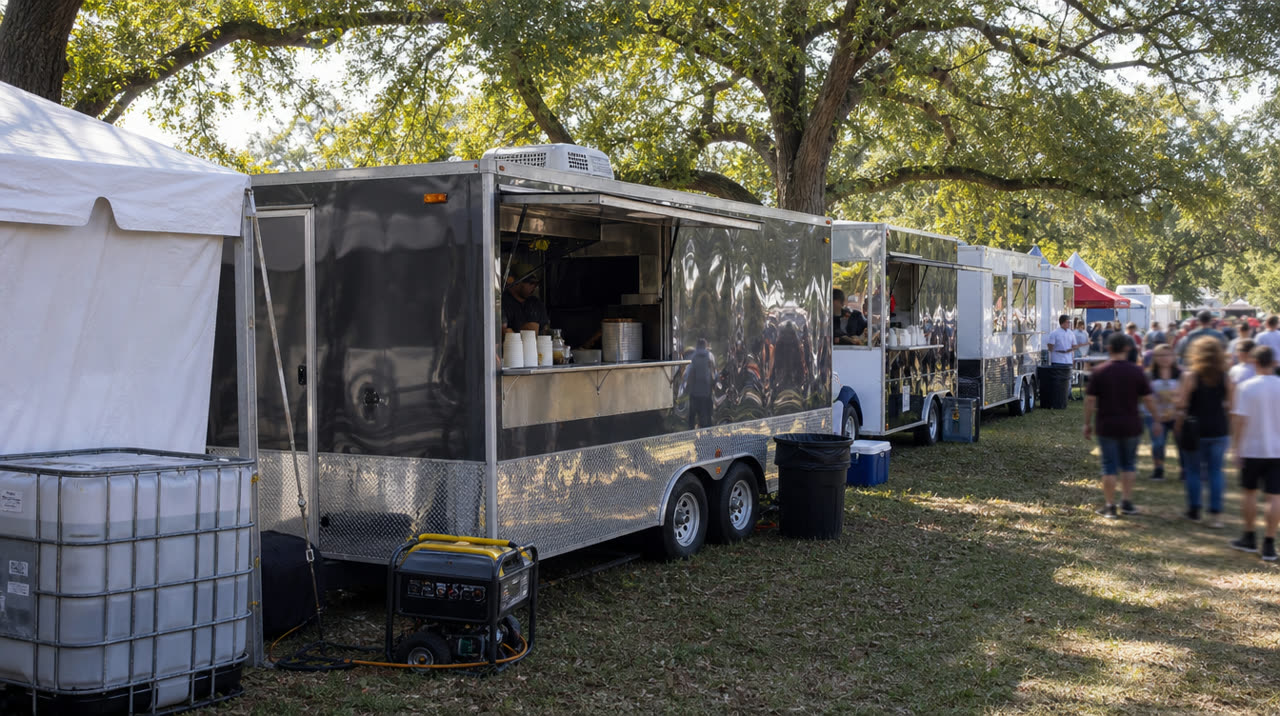
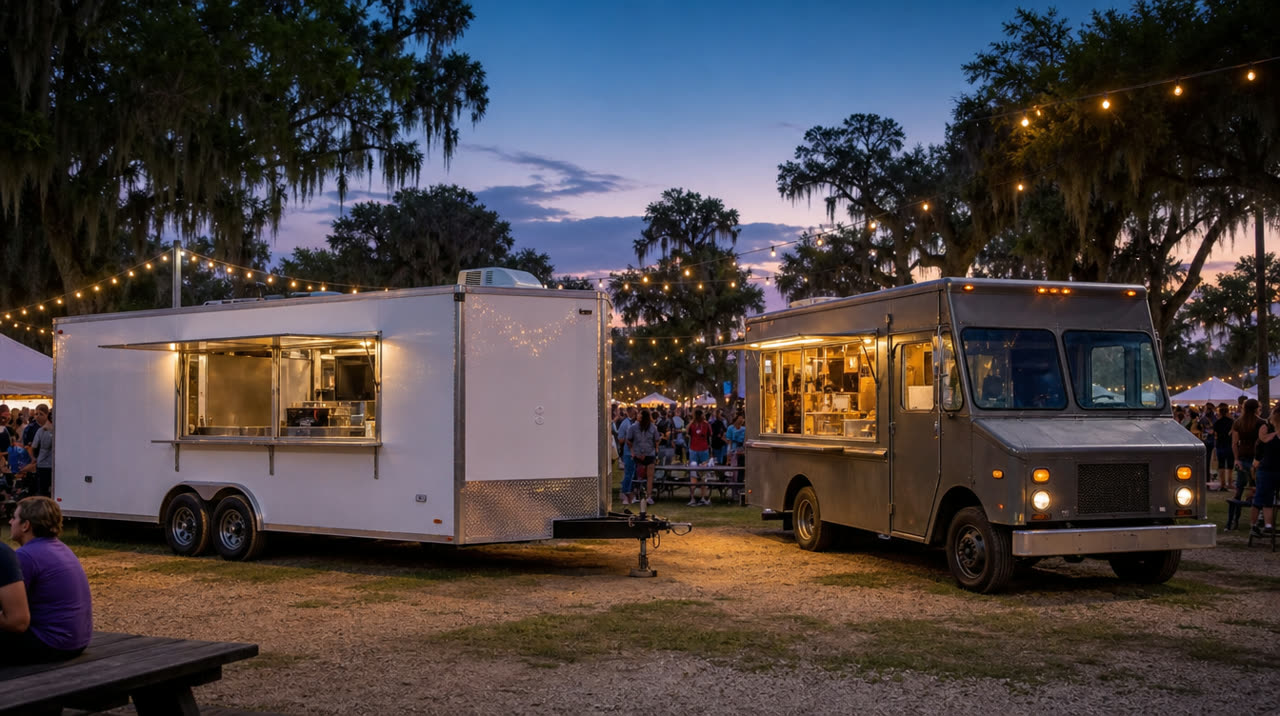
People use "concession trailer" and "food trailer" like they mean the same thing. On a festival lot they look the same, too: a box on wheels with a serving window and a line in front of it. But when we sit down with a new vendor at our shop in Lafayette, the very first thing we ask is not what size trailer they want. It's what they're going to sell. Your menu decides the build, and the build decides what you'll spend, what you'll tow it with, and how smoothly your health inspection goes.
Here's the plain-English difference, and how to figure out which one your business actually needs.
The short answer
A concession trailer is built for a short, simple menu: snoballs, lemonade, coffee, kettle corn, cold drinks, prepackaged snacks, or food that's finished somewhere else and only held or served from the trailer. Little or no cooking that throws off grease.
A full food trailer is a commercial kitchen on wheels: flat-tops, fryers, char-broilers, smokers, boiling pots. Once you're cooking with grease and open flame, you're building a different trailer, with ventilation, fire suppression, more power and more water.
Plenty of Acadiana vendors start in the first category and grow into the second. Knowing where you're starting keeps you from paying for a kitchen you don't need, or worse, buying a box that can't legally cook your menu.
What every Louisiana food trailer needs, either way
Louisiana doesn't hand out a lighter health permit because your trailer is small. Whether you're pouring snoballs or frying boudin balls, you'll go through the Louisiana Department of Health's plan review and permit before you open. We covered that process step by step in our guide to starting a food truck business in Louisiana.
In practice, almost every build we do starts with the same core:
- A separate handwashing sink. Not the same sink you wash utensils in.
- A three-compartment sink for washing, rinsing and sanitizing, if you're washing any utensils or equipment on board.
- Fresh and wastewater tanks sized for a full service day, with the wastewater tank larger than the fresh.
- Cleanable surfaces: smooth, washable walls, floors and counters.
- Hot water at the sinks.
- Refrigeration that holds temperature on a 95-degree August afternoon.
Requirements depend on your menu and can change, so confirm the details with LDH and your parish before you finalize a layout. That's exactly why the menu conversation comes first.
When a concession trailer is enough
A simpler concession build usually fits when your menu is:
- Snoballs and shaved ice. The Louisiana classic. Ice machine or shaver, syrup station, freezer space, sinks.
- Coffee, lemonade and specialty drinks. Mostly refrigeration, power for the machines, and water.
- Kettle corn, cotton candy, candied pecans. Specialty equipment, but usually not a full grease kitchen. Check with your inspector on how your specific equipment is treated.
- Prepackaged or pre-cooked food that you're holding hot or cold and serving, prepared in a permitted commissary.
What you gain: a smaller, lighter trailer that's easier to tow and park at a crowded festival, a shorter build, and a smaller investment up front. Many of these trailers can be pulled with a half-ton pickup. Before you buy, run your truck through our towing check so you know what you can pull safely.
When you need a full food trailer
If your menu includes any of these, plan on a full kitchen build:
- Fried food: boudin balls, fries, catfish, shrimp po'boys, cracklins.
- Grilled or griddled food: burgers, plate lunches, philly steaks, breakfast.
- Smoked meats cooked on board.
- Boiled seafood cooked in the trailer or on an attached setup.
Those menus bring in the big-ticket systems:
- A commercial exhaust hood over the cook line.
- A fire suppression system that covers grease-producing equipment, plus the right extinguishers.
- Serious power: a larger generator or shore-power hookup to run fryers, lights, refrigeration and the hood fan at the same time.
- More water capacity for a longer, busier service.
- More length. Most working kitchens land somewhere in the 16- to 24-foot range so two or three people can move without bumping elbows.
That's a heavier trailer, often tandem-axle, and it may need a three-quarter-ton or bigger truck to tow it well. It's also the kind of trailer that can do real volume on a Festivals Acadiens weekend. If you're budgeting one, our breakdown of what a custom food trailer costs in Louisiana walks through what moves the price.
The mistake we see most
The most expensive mistake is buying the wrong box. A vendor buys a bare concession trailer to save money, then decides to add fries. Now they're cutting a hole in the roof for a hood, running new wiring for a fryer, and re-submitting plans to the health department. Retrofitting a kitchen into a trailer that wasn't built for one almost always costs more than building it right the first time.
The opposite mistake happens too: someone selling coffee and lemonade gets talked into a 24-foot kitchen with a hood they'll never turn on. That's money that could have been marketing, inventory or a second event.
Our advice: build for the menu you'll run in year one, and leave room, in the wiring, the layout and the length, for the item you know you'll add in year two.
Three questions to answer before you call
- What are your top five menu items, and how is each one cooked? Be specific: fried, griddled, held, blended, poured.
- Where will you sell? Festivals, a permanent spot, catering, or all three? That changes your water, power and length.
- What are you towing with? Your truck's tow rating is a hard limit on how much kitchen you can bring.
Bring those three answers and we can spec a layout in one sitting.
Built in Lafayette, for Louisiana menus
Custom food and concession trailers are what we're proudest of at Ragin Trailers. We build on Rock Solid shells right here in Lafayette, lay the kitchen out around your actual menu, and plan it to go through Louisiana health review, not a generic layout shipped in from out of state. You can stand in your trailer before it's finished and see the workflow for yourself.
Start with our food trailer builder to sketch your layout, see what's on the lot today in our inventory, and look at financing and rent-to-own options so your trailer can start earning while you pay for it.
Ready to talk through your menu? Call or text 337.504.3820, or come by Ragin Trailers at 2601 SE Evangeline Thruway, Lafayette, LA 70508. We're open Monday through Friday 8 to 5 and Saturday 8 to noon.