5 Questions to Ask Before Buying a Used Trailer in Louisiana
5 Questions to Ask Before Buying a Used Trailer in Louisiana
A used trailer can be a great deal, or an expensive headache with wheels. The difference usually comes down to the questions you ask before money changes hands. We sell new trailers and we sell used ones (trade-ins and repos come through our Lafayette lot every month), so we see both sides of this: the clean used trailer that was a smart buy, and the Marketplace "steal" that shows up at our service bay a week later needing axles.
Whether you're looking at a utility trailer in somebody's driveway in Youngsville or a used gooseneck across the basin, run through these five questions first.
1. "Can I see the title, and does it match the trailer?"
Start here, because nothing else matters if the paperwork is wrong.
- Is the title in the seller's name? If the name on the title isn't the person standing in front of you, slow down. "I'm selling it for a friend" is how people end up with a trailer they can't register.
- Does the VIN on the paperwork match the VIN plate on the trailer? Find the plate or stamped number on the tongue or frame and compare it character by character. A missing, painted-over or mismatched VIN means walk away.
- Is there a lien? If the trailer is still collateral on someone's loan, the lender has to be paid and release it before it's really yours.
- Homemade or no paperwork at all? Call the Louisiana OMV before you pay and ask exactly what they'll need to title and register it. Requirements depend on the trailer, and it's a lot easier to find out before you own the problem.
A too-good-to-be-true price with fuzzy paperwork is the oldest trap there is.
2. "What shape are the frame, the welds and the floor in?"
The frame is the trailer. Almost everything else can be replaced. A cracked or rusted-through frame usually isn't worth fixing.
- Rust: surface rust is normal in South Louisiana and easy to manage. Flaking, scaling or holes in the frame rails, crossmembers or tongue are a dealbreaker. Trailers that lived near the coast or launched boats deserve an extra-hard look.
- Welds: check the stress points: tongue, axle mounts, spring hangers, coupler. Cracks or lumpy re-welds tell you the trailer was overloaded or wrecked at some point.
- Deck: on a utility trailer, push a screwdriver into the boards near the edges and over the axles. Soft wood needs replacing. On an enclosed trailer, walk the whole floor and feel for spongy spots, then look at the ceiling and corners for water stains.
Bring a flashlight and get underneath it. A seller who won't let you look under the trailer is telling you something.
3. "How are the tires, bearings, axles and brakes?"
The running gear is what keeps you, and everybody behind you on I-10, safe.
- Tires: check tread and age. Trailer tires often dry-rot long before the tread wears out, especially in our heat. Look for cracking in the sidewalls and find the date code. Old tires are a blowout waiting on a hot day.
- Bearings: jack up or rock each wheel and spin it. Grinding, wobble or grease slung on the inside of the wheel means bearing work.
- Axles: stand behind the trailer and look at how the tires sit. Wheels that lean, or tires worn hard on one edge, point to a bent axle from overloading.
- Brakes and lights: if it has electric brakes, make sure they actually work, and plug it into your truck to check every light. Wiring repairs add up quick.
- Springs and hangers: look for cracked leaves and worn-through equalizers.
Plan on tires and a bearing service for almost any used trailer. That's routine, but it belongs in your offer.
4. "Why are you selling it, and what did it haul?"
How a seller answers tells you plenty.
- Why sell? "We upgraded" or "we don't use it" are normal answers. Vague stories, or a seller who only wants to meet after dark, are warning signs.
- How was it used? A trailer that carried a zero-turn on weekends has lived a very different life from one that hauled overloaded gravel every day. Ask directly.
- Any service records? Bearing repacks, brake work and new tires all add value.
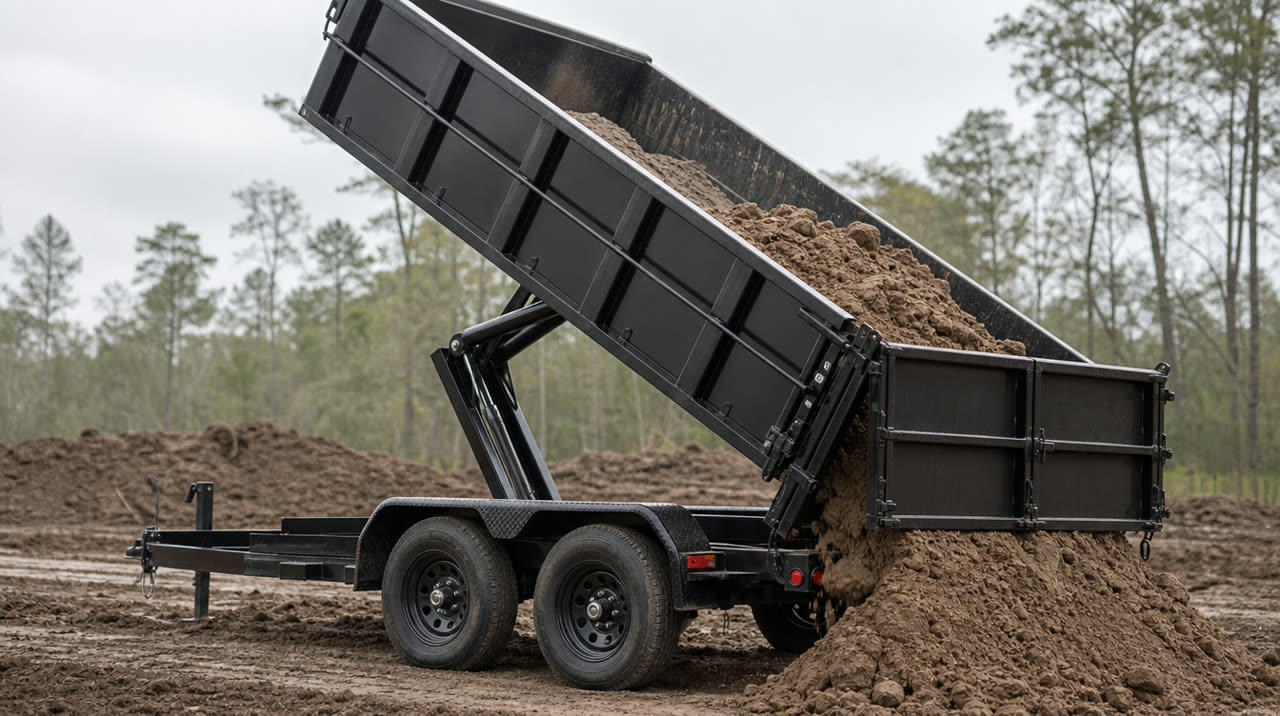
- Dump trailers: run the bed all the way up and all the way down under its own power. Watch for a slow or jerky hoist, leaking hoses, and a battery that can't finish the job. Our guide to choosing the right dump trailer size covers what to look for in the bed and hoist.
- Food and concession trailers: used ones are the riskiest buy on this list. Test every piece of equipment, the water system and the electrical, and confirm with your parish health unit that the layout can pass before you pay. Often it's cheaper to have one built around your menu with our custom food trailer builder than to rework somebody else's kitchen.
5. "How does this price really compare to new?"
Do the honest math before you fall for a "deal."
- Know what new costs. A lightly used trailer is sometimes priced only a little under a brand-new one that comes with a manufacturer warranty and zero unknowns. Check current prices in our inventory so you have a real number to compare.
- Add the fix-it list. Tires, bearings, deck boards, lights and a brake repair can turn a cheap trailer into an expensive one.
- Count the risk. A private sale is as-is, and so is a used trailer from a dealer, ours included. The difference is that a dealer has a title in hand, a lot you can come back to, and a service department. Either way, inspect it like nobody is going to fix it for you.
- Look at payments. A private seller wants cash today. A dealer trailer can usually go on financing or rent-to-own, which sometimes makes a new trailer easier on the budget than a used one bought outright.
- Make sure your truck can pull it. Run it through our free towing check before you commit to a bigger trailer than you planned on.
If the used trailer is still clearly cheaper after repairs and risk, buy it. If it's a coin flip, new usually wins.
Want a used trailer that's already been looked over?
Trade-ins and repos land on our lot regularly and they don't sit long. Every one is on our used trailers page the day it arrives, priced on the card, with the title ready. You can walk it, crawl under it and ask us all five of these questions. And if you already own a trailer you've outgrown, bring it by or text us photos and we'll give you a trade number.
The bottom line
Check the title first, the frame second and the running gear third. Ask why it's for sale, and compare the real total to the price of new. Do that in daylight, with a flashlight, and a used trailer can be a smart buy.
Want to compare before you decide? Come see us at Ragin Trailers, 2601 SE Evangeline Thruway in Lafayette, Monday through Friday 8 to 5 and Saturday 8 to 12, or call 337.504.3820.