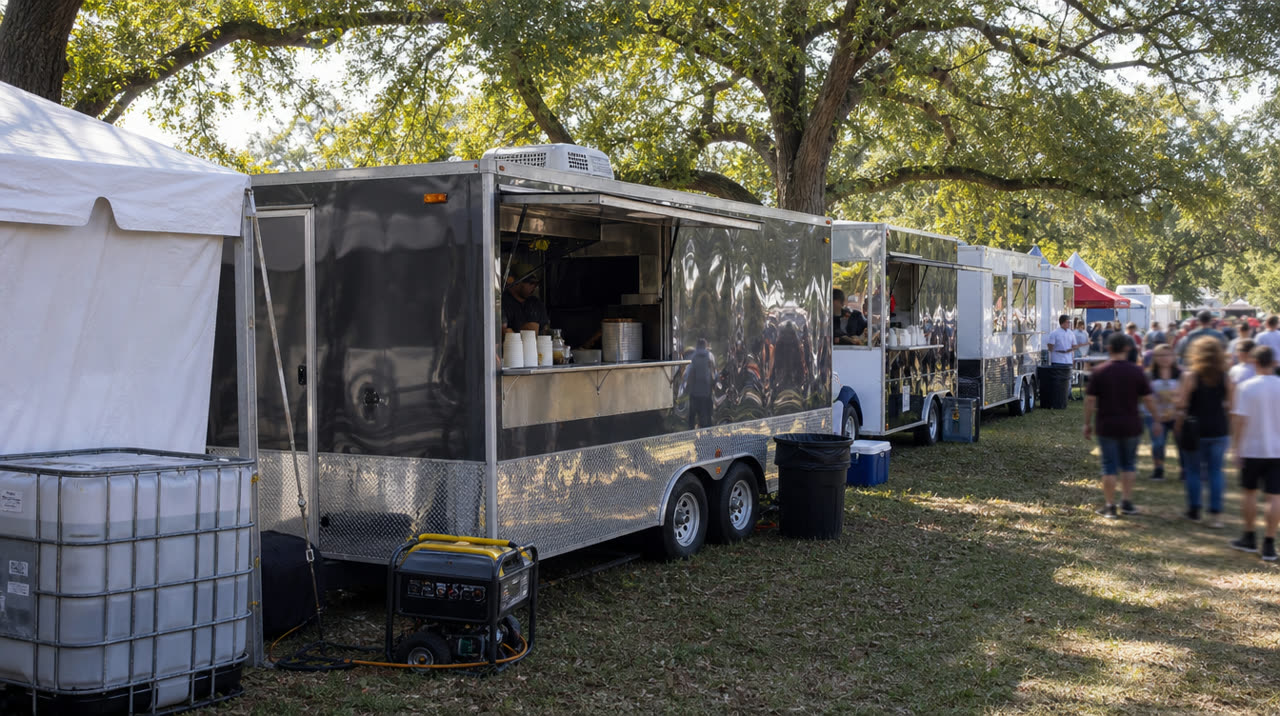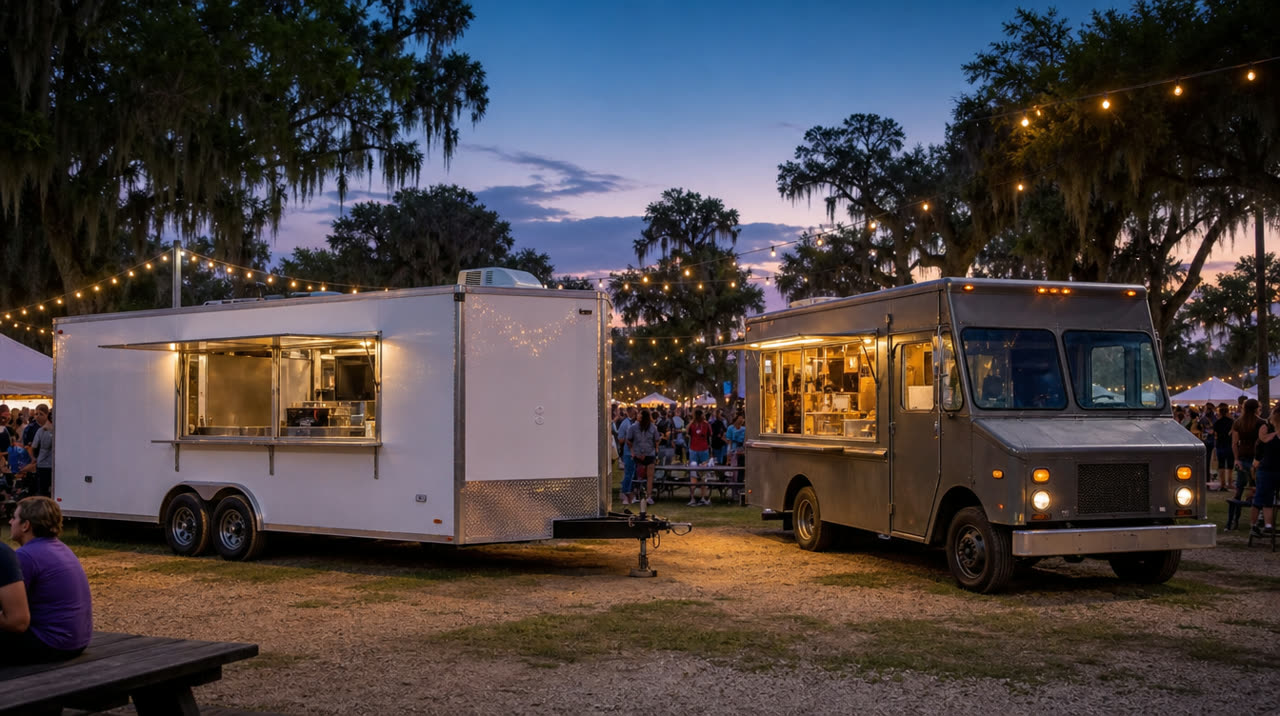
How to Start a Food Truck Business in Louisiana (Permits, Costs, Timeline)

How to Start a Food Truck Business in Louisiana (Permits, Costs, Timeline)
Louisiana runs on food. From boudin and cracklins to snoballs, plate lunches, and boiled seafood, there may be no better state in America to launch a mobile food business. But between the state health department, your parish, and your city, the permitting can feel like alligator-infested water. This is the plain-English guide to doing it right — the permits you actually need, what the fees really are in 2026, and a realistic timeline from idea to first sale. We build custom food trailers for vendors all over Acadiana, and this is the roadmap we wish every first-timer had.
Important: Rules change and vary by parish and city. Always confirm current requirements with the Louisiana Department of Health (LDH) Office of Public Health and your local government before you spend money. Sources are listed at the end.
Step 1: Nail Down Your Concept and Business Structure
Before any permit, decide:
- Your menu and concept. This drives your equipment, your "risk level" for health permitting, and your trailer size.
- Your business entity. Most food-truck owners form an LLC through the Louisiana Secretary of State for liability protection. You'll also get an EIN from the IRS (free) and register for state sales tax.
- Your budget and funding. More on real numbers below.
A clear concept also makes every later step faster, because inspectors and licensing offices ask for your menu constantly.
Step 2: Understand Louisiana's Layered Permit System
Here's the single most important thing to understand: Louisiana has no single statewide "food truck permit." Instead, you stack three layers:
- State health permit from the Louisiana Department of Health (LDH), Office of Public Health.
- Parish and city licensing — occupational license, mobile vendor permit, and zoning rules that differ in every jurisdiction.
- Supporting requirements — commissary agreement, food safety certification, vehicle and fire inspections, and insurance.
Miss any layer and you can't legally operate. Let's walk each one.
Step 3: The State Health Permit (LDH Office of Public Health)
Louisiana regulates retail food establishments — including mobile units — under the state Sanitary Code (Title 51, Part XXIII), administered by the LDH Office of Public Health.
How it works: You contact the State Sanitarian for your parish and submit a Retail Food Plan Review Questionnaire for a mobile food establishment, along with the plans for your build. The state reviews your trailer's layout — sinks, water systems, refrigeration, ventilation, and finishes — before you're permitted, then inspects the finished unit.
Plans-review fee (in effect since July 1, 2025): new plans, or plans for a substantial renovation, require a plans-review fee of $100 for a standard review (10 or fewer business days) or $1,000 for an expedited review (5 or fewer business days). It's paid at submission, either through LDH's Digital Health Department portal or by cashier's check or money order to "Louisiana Department of Health."
Annual retail food permit fees are set by state statute (La. R.S. 40:31.37). For temporary or special events such as fairs and festivals, the fee is $25 for the entire event; for seasonal establishments, it's $15 for each month of operation. The standard annual permit fee for a full-time mobile establishment depends on your operation and is confirmed by your parish sanitarian.
Bottom line on the state side: budget the one-time plans-review fee plus a modest annual permit fee — a few hundred dollars a year, not thousands.
Step 4: The Commissary Requirement
Louisiana requires most mobile food units to operate from an approved, permitted commissary — a licensed brick-and-mortar kitchen used for food prep, storage, fresh-water fill, and wastewater disposal. You'll need a signed commissary agreement to get permitted.
In the Lafayette area, shared commissary space is generally more affordable than in New Orleans, and some vendors arrange it with a restaurant or church kitchen they already have a relationship with. Line this up early — you can't finish health permitting without it.
Step 5: Parish and City Licensing (Lafayette / Acadiana Focus)
On top of the state permit, your local government requires its own licenses:
- Occupational license (sometimes bundled as a "sales tax / occupational license"): required by the parish and most cities.
- Mobile Food Unit / mobile vendor permit: In Lafayette, the Lafayette Consolidated Government (LCG) issues a Mobile Food Unit permit through a relatively friendly one-stop process. Other parishes and cities in Acadiana (St. Landry, Iberia, Vermilion, St. Martin, Acadia) each have their own permit — if you plan to work multiple parishes and festivals, you may need permits in each.
- Zoning and location rules: where you can park and vend, distance-from-restaurant rules, and event-specific vendor permits.
Action step: call or visit LCG's permitting office (or your home parish's) with your menu, trailer plans, and commissary agreement in hand. Ask for the exact current fee schedule and application packet, since local fees change.
Step 6: Food Safety Certification
Louisiana requires food-safety training for food workers. State law caps the cost of the required food handler test at $15 so it stays affordable, and food handler permits typically last two years. Most operations also want at least one Certified Food Protection Manager (ServSafe Manager or equivalent). Budget a modest amount for training and testing.
Step 7: Insurance, Vehicle, and Fire Safety
- Insurance: general liability plus commercial auto for the tow vehicle; many events and commissaries require proof of coverage.
- Fire suppression: if you cook with grease or open flame, plan on a commercial hood with an Ansul-style suppression system and periodic fire-marshal inspection.
- Propane and vehicle inspections: depending on your setup and jurisdiction.
What It Really Costs in 2026
Here's a realistic first-year snapshot for an Acadiana startup:
| Line item | What to expect |
|---|---|
| Custom food trailer | The big one — it varies with size and the kitchen package. See our custom food trailer cost guide for what drives the number |
| LDH plans-review fee (one-time) | $100 standard / $1,000 expedited |
| State health permit (annual) | Set by statute; a few hundred dollars a year for most full-time units |
| Parish and city occupational + mobile permits | Varies — call your parish |
| Commissary | Monthly; ask local restaurants and shared kitchens |
| Food handler / manager certification | $15 handler test; manager course extra |
| Business formation (LLC) + EIN | Secretary of State filing fee; EIN is free |
| Insurance (annual) | Varies with coverage |
| Initial inventory, POS, small wares | $2,000–$6,000 |
The trailer is the big investment. Many owners finance the trailer so the business can start earning while they pay it down — we offer financing for every situation plus rent-to-own, and our Louisiana trailer financing guide walks through how it works.
A Realistic Timeline
- Weeks 1–3: concept, menu, business entity (LLC and EIN), sales-tax registration, budget.
- Weeks 2–8: order and build your trailer. Custom builds take time — start early. Spec yours with our food trailer builder.
- Weeks 3–6: secure a commissary agreement.
- Weeks 4–8: submit the LDH plan-review questionnaire; work with your parish sanitarian.
- Weeks 6–10: apply for parish and city occupational and mobile vendor permits; complete food safety certification.
- Weeks 8–12: final health inspection, fire inspection, insurance in place.
- Weeks 10–14: soft launch at a festival or a lunch spot.
Plan on roughly 3–4 months from serious start to first legal sale, with the trailer build often the long pole. Move faster by lining up the commissary and starting the trailer build at the same time.
Your Trailer Is the Foundation — Build It Right
Everything above assumes your trailer will pass inspection. That's exactly why buying from a local dealer who builds to Louisiana health code matters. An out-of-state bargain that lacks a proper three-compartment sink, handwashing sink, water tanks, or ventilation will fail — and delay your launch by months. Custom food trailers are our flagship at Ragin Trailers, we build them to pass the LDH plan review, and we're 15 minutes from your sanitarian's office if a question comes up.
Not sure whether a trailer or a truck fits your plan? Read food trailer vs food truck in Louisiana first. Already know your menu? Start with the Acadiana food trailer buyer's guide.
Start Your Louisiana Food Truck the Right Way
Bring us your concept and we'll help you spec a trailer that clears inspection and fits your budget.
Ragin Trailers 2601 SE Evangeline Thruway, Lafayette, LA 70508 337.504.3820 Start with our food trailer builder, see current inventory, or ask about financing.
Frequently Asked Questions
Do I need a special license to run a food truck in Louisiana? Yes, but not a single one. Louisiana has no statewide food-truck permit. You need a state health permit from the LDH Office of Public Health, plus a parish and city occupational license and mobile vendor permit, a commissary agreement, and food safety certification.
How much does it cost to start a food truck in Louisiana? The trailer is the biggest cost and depends on size and the kitchen inside it. Add a one-time LDH plans-review fee ($100 standard), an annual health permit, local licenses, a commissary, insurance, and startup inventory. Government fees are the small part; the kitchen is the big part.
Do I need a commissary for a food truck in Louisiana? Yes. Most Louisiana mobile food units must operate from an approved, permitted commissary for food prep, storage, fresh water, and wastewater disposal, and you'll need a signed commissary agreement to get health-permitted.
How long does it take to start a food truck in Louisiana? Plan on roughly 3 to 4 months from serious start to first legal sale. The custom trailer build is usually the longest step, so start it early and line up your commissary at the same time.
Where do I get a food truck permit in Lafayette? Start with the Louisiana Department of Health's parish State Sanitarian for the health permit, and the Lafayette Consolidated Government's permitting office for the local occupational license and Mobile Food Unit permit. Bring your menu, trailer plans, and commissary agreement.
Sources:
- https://ldh.la.gov/page/for-new-businesses
- https://law.justia.com/codes/louisiana/revised-statutes/title-40/rs-40-31-37/
- https://pos.toasttab.com/blog/on-the-line/food-truck-licenses-and-permits-in-louisiana
- https://www.tryotter.com/resource/wiki/licenses-and-permits-to-open-a-food-truck-in-louisiana
Always verify current rules with LDH and your parish or city before spending money. This is general information from a trailer dealer, not legal advice.